


What are the main types of packing stackers?
Nov 06, 2025
Leave a message
As a seasoned supplier of packing stackers, I've witnessed firsthand the evolution and diversity of these essential machines in the packaging industry. Packing stackers play a crucial role in streamlining the packaging process, enhancing efficiency, and ensuring products are neatly arranged and stacked for storage or transportation. In this blog post, I'll delve into the main types of packing stackers, highlighting their features, applications, and benefits.
1. Manual Packing Stackers
Manual packing stackers are the most basic type of stackers. They are operated by hand and are typically used for small - scale operations or in situations where automation is not necessary or cost - effective. These stackers are simple in design, consisting of a frame, a platform for holding the products, and a mechanism for lifting and lowering the platform.
One of the key advantages of manual packing stackers is their low cost. They are an affordable option for small businesses or startups with limited budgets. Additionally, they are easy to operate and require minimal training. Manual stackers are also highly portable, as they can be moved around the workplace with relative ease.
However, manual stackers have their limitations. They have a lower lifting capacity compared to automated stackers, usually ranging from a few hundred kilograms to around a ton. The speed of operation is also slower, as the operator has to manually lift and position the products. This can be a drawback in high - volume production environments where efficiency is paramount.
2. Semi - Automatic Packing Stackers
Semi - automatic packing stackers bridge the gap between manual and fully automatic stackers. These machines combine some automated features with manual input. For example, they may have an automated lifting mechanism, but the operator still needs to place the products on the stacking platform and arrange them.


Semi - automatic stackers offer several benefits. They are more efficient than manual stackers, as the automated lifting process reduces the physical effort required from the operator. This can lead to increased productivity, especially in operations where the same type of product is being stacked repeatedly. They also have a higher lifting capacity than manual stackers, typically up to several tons.
Another advantage of semi - automatic stackers is their flexibility. They can be easily adjusted to handle different product sizes and shapes, making them suitable for a wide range of industries. However, they still require some level of human intervention, which means that the overall efficiency may be limited compared to fully automatic stackers.
3. Fully Automatic Packing Stackers
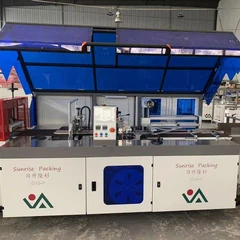
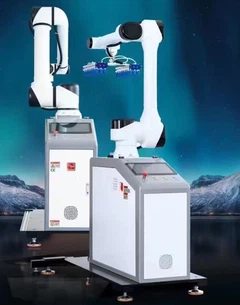
Fully automatic packing stackers are the most advanced type of stackers available in the market. These machines are capable of performing the entire stacking process without any human intervention. They use sensors, conveyors, and robotic arms to pick up, transport, and stack products in a precise and efficient manner.
One of the main advantages of fully automatic packing stackers is their high speed and efficiency. They can stack products at a much faster rate than manual or semi - automatic stackers, making them ideal for high - volume production environments. They also offer a high level of accuracy, ensuring that products are stacked neatly and securely.
Fully automatic stackers are also very versatile. They can be programmed to handle different product sizes, shapes, and weights, and can be integrated with other packaging equipment such as filling machines and labeling machines. This allows for a seamless and continuous packaging process.
However, fully automatic packing stackers are more expensive than manual and semi - automatic stackers. They also require more complex installation and maintenance, and may need specialized training for operators.
4. Palletizing Stackers
Palletizing stackers are a specific type of packing stacker that is designed to stack products onto pallets. They are commonly used in industries such as food and beverage, pharmaceuticals, and consumer goods, where products need to be transported and stored on pallets.
There are two main types of palletizing stackers: layer palletizers and robotic palletizers. Layer palletizers work by forming layers of products on a pallet one at a time. They are suitable for products that are uniform in size and shape, such as boxes or cans. Robotic palletizers, on the other hand, use robotic arms to pick up and place products on a pallet. They are more flexible and can handle a wider range of product sizes and shapes.
Palletizing stackers offer several benefits. They improve the stability of the stacked products on the pallet, reducing the risk of damage during transportation. They also increase the efficiency of the palletizing process, as they can stack products at a faster rate than manual methods.
5. Book Stackers
Book stackers are specialized packing stackers designed specifically for the book industry. They are used to stack books neatly and efficiently, either for storage in a warehouse or for shipping to retailers.
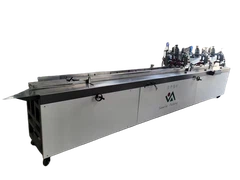
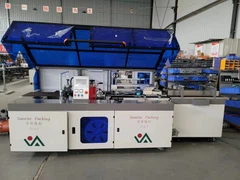
Automatic Book Stacker is an example of a high - tech book stacking solution. These machines can handle different book sizes and thicknesses, and can stack books in a variety of configurations. They use advanced sensors and control systems to ensure that books are stacked accurately and without damage.
Book stackers offer significant advantages in the book industry. They improve the efficiency of the book handling process, reducing labor costs and increasing productivity. They also ensure that books are presented in a professional and organized manner, which is important for both storage and display.
6. Custom - Built Packing Stackers
In some cases, standard packing stackers may not meet the specific requirements of a particular industry or application. This is where custom - built packing stackers come in. These stackers are designed and manufactured according to the unique needs of the customer.
Custom - built packing stackers can be tailored to handle special product shapes, sizes, and weights. They can also be integrated with existing production lines and equipment, ensuring a seamless fit into the customer's operations. For example, a company that produces irregularly shaped products may require a custom - built stacker with a specialized gripping mechanism.
While custom - built packing stackers are more expensive than off - the - shelf models, they offer a high level of flexibility and performance. They can provide a long - term solution for companies with unique packaging requirements.
Conclusion
In conclusion, there are several main types of packing stackers, each with its own features, applications, and benefits. Whether you are a small business looking for an affordable and simple solution or a large - scale manufacturer in need of high - speed and efficient automation, there is a packing stacker that can meet your needs.
If you are interested in learning more about our Packing Stacker products or have specific requirements for your packaging operations, we invite you to contact us for a detailed discussion. Our team of experts is ready to assist you in finding the perfect packing stacker solution for your business.
References
- Packaging Machinery Manufacturers Institute (PMMI). "Packaging Machinery Technology Trends."
- IndustryWeek. "Automation in the Packaging Industry."
- Modern Materials Handling. "Palletizing and Stacking Solutions for the Warehouse."
Send Inquiry