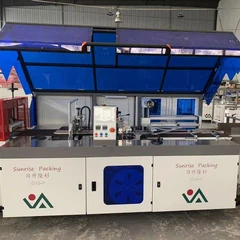
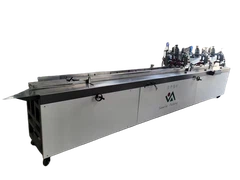
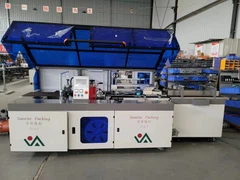
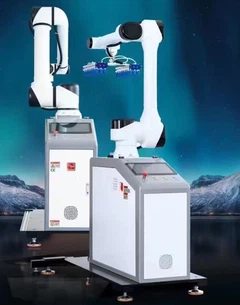

Why Choose Us?


Rich experience: Sunrise(Tianjin) packaging Machinery CO.,LTD, established in 2008 (Before name is Beijing Sunrise Packing Machinery Co.,LTD.)and has been committed to production and sales of post-packaging equipment and related material since established 17 years ago.
 

Diverse product types: Sunrise(Tianjin) packaging Machinery CO.,LTD is professional in researching and development of the following products: Plastic sealing machine, heat shrink packaging machine, baler, sealing and cutting machine, labeller, book distribute machine, Auto weighing machine, automatic unpacking machine, packing machine, belt conveyor, SS steel conveyor, stacker, automatic packaging line, shrink film and other related accessories.
 

Customized services: We can customized packaging equipment according to different goods and spaces of customers, make the product packaging automatically in production. Before production, we will provide technical guidance and help to debug the machine.
 

High quality: In many years of production practice has accumulated a wealth of on-site practical application experience, it lays the foundation of customer service.Excellent product quality and timely perfect after-sales service system are winning more and more praises of customers, and establish a long-term stable cooperative relationship with customers.


What Is Labeling Machine


Labeling machine is an integral part of most automated packaging solutions. There are different types of labeling machines, which include both print and apply labelers and apply-only machines. Print and apply labelers print and then immediately apply the labels, while apply-only machines apply pre-printed labels. Both types of machinery can be configured for different labeling applications, including front and back product labeling, horizontal wrap, flat carton labeling, and more.


What Are the Advantages of Labeling Machine
 

Below are some of the advantages of labeling machine:

01/

Labeling machines have high performance and are cost-effective
The labeling machine not only meets the requirements of product labeling but is also durable. The labeling machine has high precision and the labeling speed is high.
A labeling machine can last up to 10 years while still functioning well.

02/

They are widely used and are versatile
The labeling machine has no restrictions on the applicable environments or areas that it can be used to perform printing or labeling operations.
Be it the food industry, chemical industries, hardware, cosmetics, pharmaceutical all these areas of application require a labeling machine.
The labeling machine can print different types of labels from stickers, paste labels, and anti-counterfeit labels.

03/

Labeling machine is more efficient with low costs
With the integration of labeling machine from the manuals, ones are greatly making impacts in industries and manufacturing.

04/

It's more efficient and has higher labeling quality
The use of labeling machine results in massive output production and low input cost which gives big margin profits to industries.

05/

Labeling machine is reliable, convenient and easy to manage
It's easy to manage a labeling machine since it does not require too many operations. Less manpower is required.
It provides reliable working performance and it's convenient especially if you know what type and purpose of the labeling machine.

06/

Labeling machine is more durable
With proper maintenance practices, this labeling machine can be of service for a period of up to 10 years.


What Types of Labeling Machines Are There


Labeling machines can be classified according to their technical capabilities or to the way they apply labels.
In terms of their technical capabilities, labeling machines can be divided into:
● Label dispensers, which only apply labels to packaging and products. The labels applied by the label dispensers are previously printed by another machine and loaded into the dispenser.
● Label printers and dispensers, which not only apply labels, but also produce them. In reality, a label printer and dispenser is nothing more than the combination of a label printer and a label dispenser into one machine.
In terms of the way they apply labels, labeling machines can be divided into:
● Label printers, which are used to print the labels. The labels are created with the help of a computer and a label software. Once they have been created, the computer sends the labels to the label printer, which then prints them.
● Drop-on-demand inkjet printers, which directly print the labels on the packaging or products. Unlike label printers, drop-on-demand inkjet printers apply ink on the surface of an item, leaving a permanent mark on it. As a result, there is no need to first manufacture the labels and then apply them. Both procedures can, in this sense, be done at once.
● Laser markers, which mark items or products with the help of a laser beam. Similar to drop-on-demand inkjet printers, laser markers make it unnecessary to print labels.


How Does the Labeling Machine Work

If you intend to handle a large-scale production, labeling speed and volume are critical. That's where an labeling machine comes into play. An automated labeling device is designed to streamline the process while ensuring productivity and quality.


Prepare and thread the label stock
No matter the level of automation your equipment has, this step is inevitable. Place a label stock on the label roll holder. This component comes with a spindle that is used to place and hold the label stock as fed into the machine. Pull the tail of the label roll and thread it through rollers, the code printer, the photoelectric sensor, and the take-up reel.


Load products to be labeled
Suppose you're using a round bottle labeling machine. Load bottles onto an infeed turntable, which is connected to a conveyor. The loading action can be either performed by hand or an upstream conveyor. This depends on your machine configuration.


Feed products
The bottles are transferred to the labeling area by the conveyor. There's a spacer wheel sitting on the side of the conveyor. This component stops the passing bottles for seconds and releases them. This ensures bottles are even spaced as they pass through the labeling station on the conveyor.


Apply labels
When the even-spaced bottles reach the labeling area, a belt applicator dispenses labels to each bottle as they pass. The synchronous movement of the belt applicator and the conveyor enables the bottle to rotate. This allows the label to be applied to the bottle.


Discharge the labeled bottles
Once applied with labels, the bottles are transferred to an accumulation table. If the labeling machine is integrated into a production line, the bottles will move to the next processing area.


How to Choose Labeling Machine


When selecting labeling machine, there are several factors to consider to ensure you choose the most suitable option for your specific needs. Here are some key points to keep in mind:
Labeling requirements: Determine the type of labels you need to apply, such as self-adhesive labels, shrink sleeves. Consider the size, shape, and material of your containers to ensure the labeling machine can handle them.
 

Production volume: Assess your production volume and speed requirements. Different labeling machines have varying output capacities, so choose one that can accommodate your production demands efficiently.
 

Automation level: Decide whether you need an automatic, semi-automatic, or manual labeling machine. Automatic machines offer higher speed and efficiency, while semi-automatic and manual machines are suitable for smaller operations or when flexibility is needed.
 

Labeling accuracy: Precision is crucial to ensure labels are applied accurately and consistently. Look for machines that offer precise positioning and alignment mechanisms to avoid mislabeling or wastage.
 

Machine flexibility: Consider the versatility of the labeling machine. Will it be able to handle various container sizes and shapes. Can it accommodate different label sizes and types? Flexibility is essential if you have a diverse product range.
 

Ease of use and maintenance: Look for a machine that is user-friendly, with intuitive controls and easy setup. Consider the maintenance requirements, such as cleaning, changing labels, and replacing parts, to ensure smooth operation.
 

Integration capabilities: If you have an existing production line, check if the labeling machine can integrate seamlessly with your current equipment. Compatibility with other packaging machinery can enhance overall efficiency.


Notebook Labeling Machine

Functions of Labeling Machine


Labeling machine is a tool used for packaging. It applies labels to containers and can also print the information on the labels. It works by using a reel of labels and a framework wheel that moves in a pivoting motion. It has sensors that recognize different labels and can read information on them.A good labeling machine has features that make it safe and easy to use.


It should be able to operate continuously and easily load spools of labels. It should also be able to remove low-quality labels. Besides being efficient, it should also be able to cooperate with other equipment in the workplace.The automatic labelling machine is useful in many industries. It can print different kinds of labels. It has a number of safety features, such as an emergency button. It also features a web detection system that detects gaps between labels and relays the information to the control panel.


It has photoelectric sensors, electromechanical switches, and capacitive sensors. Lastly, it has emergency buttons that enable it to remove labels that don't meet its standards.Labeling machines are very easy to use. They have many different parts, and it is important to understand how they work before operating the machine. The controls are often in the form of switches or touchscreens


5 Basic Rules For Using A Labeling Machine

A labeling machine speeds up and simplifies the packaging process by labeling products with information such as price, date, and manufacturer. However, there are some basic rules to keep in mind when using a labeling machine. Here are 5 basic rules for using a labeling machine:

Choose the correct label

Different sizes and types of labels are used for each product. When using a labeling machine, it is important to choose the correct label. For example, a food-safe label should be used for a food product.

01

Use the machine correctly

Each labeling machine has different features. Before using the machine, read the instructions and installation guide carefully. Use the machine correctly to attach the correct labels to your products.

02

Proper placement of labels

Properly attaching labels ensures that your products are properly labeled. Improper placement of labels can result in unwanted consequences for your products. For proper labeling, you should place your products correctly in the machine and label them with the correct label size.

03

Machine maintenance

Machine maintenance is crucial for the labeling process. Clean and set up the machine correctly before use. Additionally, periodic maintenance extends the life of the machine and helps prevent malfunctions.

04

Safety

Labeling machines can contain potential hazards such as sharp edges and moving parts. It is important to follow all safety procedures when using the machine. Measures such as safety guards, safety locks, and signal lights prevent work accidents and ensure worker safety.

05


Troubleshooting Tips for Common Labeling Machine Issues


Even with routine maintenance, occasional issues may arise. Effective troubleshooting is essential for minimizing downtime and ensuring efficient label application. Here are troubleshooting tips for common labeling machine problems:
 

Label misalignment or wrinkling
Adjust labeling head position
If labels are consistently misaligned or wrinkled, check the positioning of the labeling head. Ensure it is aligned with the product's surface, and adjust as needed.
 

Examine label roll tension
Incorrect label roll tension can cause misalignment. Check the tension settings and make adjustments accordingly.
 

Label jams
Inspect label path
Label jams often occur due to obstructions in the label path. Inspect the path for any debris or misaligned labels that may impede the smooth movement of labels.
 

Check roller conditions
Worn or damaged rollers can contribute to label jams. Inspect and replace rollers as needed.
 

Inconsistent label application
Evaluate labeling speed
Inconsistencies in label application may arise if the labeling speed is too high for the machine to handle. Adjust the speed settings based on the machine's capabilities.
 

Review label placement sensors
Malfunctioning label placement sensors can lead to inconsistent application. Check and calibrate sensors to ensure accurate label placement.
 

Adhesive residue buildup
Adhesive residue buildup on labeling heads or rollers can impede label adhesion. Regularly clean these components using manufacturer-approved cleaning agents to prevent residue accumulation.
 

Faulty sensor readings
Inspect sensor alignment
Misalignment or damage to sensors can result in faulty readings. Verify the alignment and condition of sensors and make adjustments or replacements as necessary.
 

Check for interference
External factors such as ambient light or dust can interfere with sensor readings. Create a controlled environment and ensure sensors are free from obstructions.
 

Printer issues for label information
Verify printer settings
You must ensure that printer settings align with label specifications using integrated printing capabilities. Incorrect settings may lead to distorted or misprinted labels.
 

Monitor ink and ribbon levels
When you run out of ink or ribbon, it can cause printing disruptions. That is why one must regularly check the ink and ribbon levels and replenish the supplies.


Our Factory
 

Sunrise(Tianjin) packaging Machinery CO.,LTD, established in 2008 (Before name is Beijing Sunrise Packing Machinery Co.,LTD.)and has been committed to production and sales of post-packaging equipment and related material since established 17 years ago.Excellent product quality and timely perfect after-sales service system are winning more and more praises of customers, and establish a long-term stable cooperative relationship with customers.


productcate-1-1

 
video


Company Certificate


High-tech Enterprise Certificate,utility Model Patent Certificate*3,Computer Software Copyright Registration Certificate*4


productcate-1-1


FAQ


Q: What is a labeling machine?

A: A labeling machine is a type of machine used to apply labels to packaging or products.
In addition to applying labels, some labeling machines are capable of producing them.

Q: What types of labeling machines are there?

A: Labeling machines can be classified according to their technical capabilities or to the way they apply labels.
In terms of their technical capabilities, labeling machines can be divided into:
Label dispensers, which only apply labels to packaging and products. The labels applied by the label dispensers are previously printed by another machine and loaded into the dispenser.
Label printers and dispensers, which not only apply labels, but also produce them. In reality, a label printer and dispenser is nothing more than the combination of a label printer and a label dispenser into one machine.

Q: How does a labeling machine work?

A: The way a labeling machine works depends on its technical capabilities. In this sense, labeling machines that can print and apply labels function differently than those which can only apply labels.
In addition, not all labeling machines apply labels the same way. Some machines can print labels on label paper, while others can directly mark items or products using ink or a laser beam.

Q: What is the application of labelling machine?

A: Labeling machine has a wide variety of applications since most commercial products have attached labels on the actual item and its packaging. They can also create labels on cartons, cases, and pallets.

Q: Why is labeling machine important?

A: All in all labeling machines can bring many benefits to a business, including increased efficiency, reduced labor costs, and improved product quality. They can help to ensure that products are labeled consistently and accurately, and can help to reduce the risk of errors.

Q: What are the advantages of labeling machine?

A: Below are some of the advantages of labeling machine
Labeling machines have high performance and are cost-effective
The labeling machine not only meets the requirements of product labeling but is also durable. The labeling machine has high precision and the labeling speed is high.
A labeling machine can last up to 10 years while still functioning well.
They are widely used and are versatile
The labeling machine has no restrictions on the applicable environments or areas that it can be used to perform printing or labeling operations.

Q: How do you set up a labeling machine?

A: Hardware setup:
Plug your label printer into a power source.
Ensure the label media is loaded correctly: Down from the top and under the tabs.
Ensure the label media is the correct type (2.25" x 1.25", 2.25' x 4, etc.)
Press and hold the "feed" button until the light flashes once, then release.

Q: What is the principal of labeling machine?

A: The principle of the labeling machine is that the item is fed to the labeling machine at a constant speed on the conveyor. The mechanical fixture separates the items a fixed distance and pushes the item in the direction of the conveyor. It has a drive wheel, a labeling wheel and a reel.

Q: What is the operation of labeling machine?

A: The principle of the labeling machine is that the item is fed to the labeling machine at a constant speed on the conveyor. The mechanical fixture separates the items a fixed distance and pushes the item in the direction of the conveyor. It has a drive wheel, a labeling wheel and a reel.

Q: Which products can be labeled with labeling systems?

A: A wide variety of products and product packaging can be labeled with labeling machines. Whether large, small, angular, cylindrical, conical or oval product formats – with labeling systems, almost any product shape can be labeled.

Q: Which surfaces can be labeled with labeling machines?

A: Basically, almost all product surfaces can be provided with labels with labeling machines:
Oily surfaces
Damp surfaces
Rough or dusty surfaces
Soft or elastic surfaces
Smooth surfaces
Solid surfaces

Q: What are the features and specifications of semi-automatic labeling machines?

A: The features and specifications of semi-automatic labeling machines vary depending on the model and manufacturer, but some common ones are:
A label dispenser that feeds and peels off the labels from the backing paper
A label applicator that applies the labels on the products or packaging using pressure, vacuum, or air-blow methods
A control panel that allows the operator to adjust the speed, position, and timing of the label application
A sensor that detects the presence and position of the products or packaging
A counter that records the number of labels applied
A label roll holder that supports the label roll and allows easy loading and changing
A label waste rewinder that collects the backing paper after the labels are peeled off
A power supply that provides electricity to the machine

Q: Can the labeling machine be connected to the existing blister packaging machine?

A: Yes, labeling machine can be connected with blister packing machine.

Q: Different bottles are used in the same labeling machine, do I need to change the mold?

A: There is no need to change the mold, just adjust it according to the size of the bottle. But if the bottle height changed, it may require to change Label Rolling station, so before you order labeling machine, you'd better to tell your bottle size range.

Q: Can round bottle labeling and square bottle labeling be on the same automatic labeling machine?

A: Yes, you can use round bottle and square bottle on the same labeling machine, but you need to figure it out before you order labeling machine, because we need to add some parts on the labeling machine to work with both bottle shape.

Q: When the label width changes, do I need to replace the label/pressing roller?

A: Yes, you need to change the label roller, which is usually made according to the largest label at the beginning.

Q: If the label size exceeds the machine size, which labeling machine is used?

A: It depends on the specific size, and the labeling machine can be made according to specific requirements.

Q: What is the instrument used for Labelling?

A: Label applicators, also known as label dispensers, are labeling machines that attach pre-printed labels on films, with pressure-sensitive adhesive (PSA) on their backside, to products, containers, cases, and packages.

Q: How to clean your labeling machine?

A: It is critical the peeler bar and the applicator are clean of adhesive. The label sensor should be wiped clean with a dry cloth also. The cleaning for the top plate, supply spool, and label sensor should be done anytime machine production is stopped and at a minimum once a day.

Q: What are the precautions for using a labeling machine?

A: Safety: Labeling machines can contain potential hazards such as sharp edges and moving parts. It is important to follow all safety procedures when using the machine. Measures such as safety guards, safety locks, and signal lights prevent work accidents and ensure worker safety.

We're well-known as one of the leading labeling machine manufacturers and suppliers in China. If you're going to buy customized labeling machine made in China, welcome to get more information from our factory.

adhesive sealing packing machine, jar packing machine, anti static packing machine

Send Inquiry