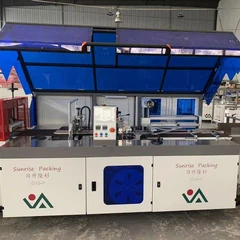
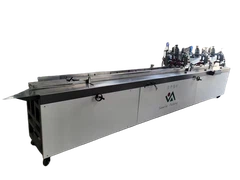
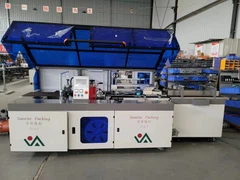
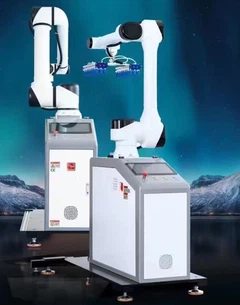

Why Choose Us?


Rich experience: Sunrise(Tianjin) packaging Machinery CO.,LTD, established in 2008 (Before name is Beijing Sunrise Packing Machinery Co.,LTD.)and has been committed to production and sales of post-packaging equipment and related material since established 17 years ago.
 

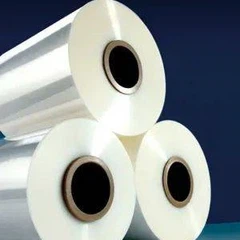
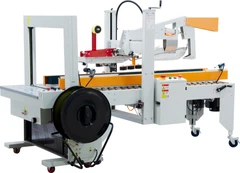
Diverse product types: Sunrise(Tianjin) packaging Machinery CO.,LTD is professional in researching and development of the following products: Plastic sealing machine, heat shrink packaging machine, baler, sealing and cutting machine, labeller, book distribute machine, Auto weighing machine, automatic unpacking machine, packing machine, belt conveyor, SS steel conveyor, stacker, automatic packaging line, shrink film and other related accessories.
 

Customized services: We can customized packaging equipment according to different goods and spaces of customers, make the product packaging automatically in production. Before production, we will provide technical guidance and help to debug the machine.
 

High quality: In many years of production practice has accumulated a wealth of on-site practical application experience, it lays the foundation of customer service.Excellent product quality and timely perfect after-sales service system are winning more and more praises of customers, and establish a long-term stable cooperative relationship with customers.


What Is Belt Conveyor


Belt conveyors are mechanical equipment that utilizes continuously running conveyor belts for material transportation. It is mainly composed of driving device, conveyor belt, roller, tensioning device, redirection device and frame. The driving device drives the conveyor belt to move, and the materials are placed on the conveyor belt and transported to the designated location as the conveyor belt moves.


Components of a Belt Conveyor


A belt conveyor system has a head pulley, tail pulley, idler rollers, belt, and frame.
 

Head pulley
The head pulley is coupled with the actuator and the electric motor. It drives the conveyor, acting as the pulling force. The head pulley is located at the point that the conveyor offloads, known as the discharge end of a belt conveyor. Since it drives the whole system, it is often necessary to increase the traction of its belt with a rough jacket covering its outer surface. The jacket is referred to as a legging.
The head pulley usually has the largest diameter of all the pulleys. Sometimes a system can have multiple pulleys that act as drive pulleys. The pulley at the discharge end, is a drive roller usually with the biggest diameter, and will be identified as the head pulley.
 

Return or tail pulley
This is located at the loading end of the belt conveyor. Sometimes it comes with a wing shape to clean the belt by letting material fall aside to the support members.
In a simple belt conveyor setup, the tail pulley will be mounted on guides usually slotted to allow the belt's tension. In other belt conveying systems, tensioning of the belt is left to another roller called the take-up roller.
 

Idler roller
These are rollers employed along the length of the belt to support the belt and load, prevent sagging, align the belt, and clean up the carryback (material left sticking on to the belt).
Idler rollers can either do all of the above or any one of them, but in any space, they will always act as support for the belt.
 

Troughing idlers
Troughing idlers will have three idler rollers set up in a configuration that makes a "trough" of the belt. They are located on the side that carries the load on the belt conveyor. The idler in the center is fixed, with the two on the ends able to be adjusted. This is so the angle and depth of the trough can be varied.
These idlers, when employed, will reduce spillages and maintain a constant cross-sectional area along the length of the belt conveyor. Maintaining a constant cross-sectional area is important for stability.
 

Rubber disk idler
This idler has rubber disks placed at set distances along the axis of the roller. On the extreme ends, the rollers are much closer so that they can support the belt edge, which is prone to tear. The spaced-out disks will break off any connected carryback/ leftover material and reduce material building up on the bottom of the belt. This is a common cause for mistracking (when the belt shifts to one side of the system and causes misalignment).
 

Screw idler roller
Sometimes the disks are helical like a screw and the idler will be called a rubber screw idler roller. The function will remain the same. An example of a screw idler roller is depicted below.
The screw idler can also be made out of rubber helix. Screw idlers are most common where a scrapper that takes off carryback would not be feasible, especially on mobile belt conveyors.
 

Trainer idler
Trainer idlers keep the belt running straight. It works against mistracking. It achieves this by a central pivot that swerves the roller back to the center should the belt drift off to one side. It also incorporates two guide rollers to act as guides for the belt.
 

Conveyor belt
In setting up a belt conveyor, the belt is perhaps the most intricate.The tension and strength are important since the belt takes a lot of punishment when loading and ferrying the material.
 

Conveyor frame
The frame, depending on the loading, height of operation, and distance to be covered will vary. They can come in a simple setup that can be represented by a cantilever. They can also be trusses in the case of larger loads. Extrusions of aluminum are also employed for simple and lightweight operations.


Types of Belt Conveyor
 

Modular Belt Conveyor
Modular belt conveyor is a versatile system powered by sprockets, comprising single or multiple belts. These belts maintain a straight trajectory, offering adaptability in length and width to cater to diverse industry requirements.


Telescopic Belt Conveyor
Telescopic belt conveyors facilitate secure and efficient loading and unloading with extendable lengths. Widely employed in logistics, ports, stations, airports, and warehouses, they serve industries spanning post, home appliances, food, tobacco, and light manufacturing.


Straight Belt Conveyor
Comprising a flat PVC/PVK belt, the straight belt conveyor acts as a pivotal transition component in the conveying process. It accommodates a wide array of bulk cargo and single-piece objects like cartons and packaging bags, especially those with lower weights.


Curve Belt Conveyor
Constructed from flat PVC/PU/PVK material, the curve belt conveyor assumes a critical role in facilitating turns within the conveying line. Capable of executing turns at angles of 45°, 90°, 180°, or customizable degrees, it finds extensive application in food, tobacco, medicine, printing, express, and logistics industries.


What Are the Benefits of Belt Conveyors

Belt conveyors are widely used in various industries for the transportation of goods and materials over short or long distances. Some of the key benefits of belt conveyors include:


Efficiency

Belt conveyors are efficient in moving large quantities of goods or materials over long distances. They can handle a wide range of materials, including bulk materials, small items, and irregularly shaped items.


Versatility

Belt conveyors can be used to transport a wide variety of materials, such as grains, coal, ore, sand, gravel, and more. They can be customized with different belt types, speeds, and configurations to suit specific material handling needs.


Safety

Belt conveyors are generally safer than other forms of material handling equipment like forklifts or manual transportation methods. They help reduce the risk of injuries associated with manual handling and provide a controlled and consistent method of transporting materials.


Low maintenance

Belt conveyors require relatively low maintenance compared to other types of conveying systems. Routine maintenance tasks such as belt cleaning and inspections can help ensure the smooth operation of the conveyor system.


Cost-effective

Belt conveyors are a cost-effective solution for material handling, especially for transporting large volumes of materials over long distances. They have lower operating costs compared to other transportation methods and can help improve overall operational efficiency.


Automation

Belt conveyors can be easily integrated with automation systems to create efficient material handling processes. They can be equipped with sensors, controllers, and other automation technologies to optimize material flow and increase productivity.


Space-saving

Belt conveyors can be designed to fit into tight spaces and can be configured to navigate around obstacles, making them suitable for a variety of industrial settings where space is limited.


Environmental benefits

Belt conveyors are energy-efficient and can help reduce the carbon footprint of material handling operations compared to other transportation methods that rely on fossil fuels.


Power Belt Conveyors


Belt Conveyor Applications

Conveyor systems are at work across many industries, including air travel, mining, manufacturing, pharmaceuticals, food processing and more.


At an airport, belt conveyor is the best way to process, sort, load and unload passenger luggage efficiently. The baggage carousel is a practical use of industrial belt conveyors that most people encounter in life — luggage is loaded onto the belt in a secure area and then swiftly delivered to the terminal where the passengers have access. The belt continuously passes through the loading area and circulates back around to the baggage reclaim area for efficient delivery.


For the pharmaceutical industry, belt conveyor systems transport cardboard boxes or palates full of medical supplies before and after packaging and distribution. In manufacturing and mining, enormous amounts of material are transported through tunnels, along roads and up steep slopes on belt conveyors. Durable belting material and good use of support rollers are necessary for belt conveyor systems in these industries.


For food processing, products go through their life cycle on a belt conveyor. Items can be spread, stamped, rolled, glazed, fried, sliced and powdered — all while rolling on the belt. Think of the hours of manpower that would otherwise be spent bringing each food item through every part of that process. With belt conveyors, goods move from start to finish in mass quantities while still retaining a uniform high quality.


Each industry has its own specifications and requirements for the type of belt conveyor they use. From shipyards and power plants to bakeries and ice cream plants, the belt conveyor is the go-to utility because of its simplicity and reliability.


7 Steps for Effective Belt Conveyor Maintenance


Enhancing the self-inspection process regularly and preparing for unforeseen repairs are essential for maximizing productivity and ensuring the reliability of belt conveyors. Here are seven steps to streamline conveyor maintenance and minimize the need for new belt installations:
 

Understand specific requirements
Facility managers must discern the unique maintenance needs of their establishments before tailoring maintenance programs and inspection protocols. The preventative maintenance regimen for a food processing plant belt conveyor differs from that of a glass manufacturing plant.
 

Develop a plan
A well-structured maintenance plan should outline procedures for equipment inspection, identification of preventative maintenance requirements, and a clear set of actions to address maintenance issues as they arise.
 

Implement sanitation
Utilize approved wash-down cleaning chemicals for wet cleaning scenarios, while exploring the benefits of dry steam solutions for sanitizing surfaces in dry-clean-only environments.
 

Monitor damage
Train technicians to meticulously inspect conveyor belts for signs of damage such as strings, frays, loose pieces, or general wear and tear on belts and components. These indicators signal the need for prompt repair or replacement.
 

Ensure tracking
Verify that technicians install belts with the correct tension and maintain a debris-free environment around the belt conveyor. Promptly address any tracking or alignment issues to prevent further damage.
 

Maintain inventory
Minimize downtime by stocking essential spare parts like sprockets, drives, cleats, motors, and other critical components that are challenging to replace quickly.
 

Track lifespan
Monitoring the lifespan of conveyor belts enables building operations and facility managers to devise a strategic replacement schedule. Belts in a vegetable processing plant might necessitate daily replacement, while those in a distribution centre could last up to five years.


What Are Some Tips When Working at the Belt Conveyor
 

Position yourself so that you are not hit by objects moving down the conveyor.


Ensure that you can see the conveyor system when you are at the operating controls.


Ensure that guards are in place for all moving parts of the drive system and in all zones where hazards such as in-running nip, drawing-in, trapping and crushing, friction burns or abrasion are present (includes above, sides, and below the conveyor).


Guard all pinch points between the conveyor system and fixed objects.


Locate guardrails around low level conveyors and areas where conveyors pass through the floor/ceiling.


Locate emergency stop cut-off switches near the operator and along the length of the conveyor at approximately 30 metres (100 feet) apart (or closer).


Our Factory
 

Sunrise(Tianjin) packaging Machinery CO.,LTD, established in 2008 (Before name is Beijing Sunrise Packing Machinery Co.,LTD.)and has been committed to production and sales of post-packaging equipment and related material since established 17 years ago.Excellent product quality and timely perfect after-sales service system are winning more and more praises of customers, and establish a long-term stable cooperative relationship with customers.


productcate-1-1

 
video


Company Certificate


High-tech Enterprise Certificate,utility Model Patent Certificate*3,Computer Software Copyright Registration Certificate*4


productcate-1-1


FAQ


Q: What should belt conveyors be equipped with?

A: Belt conveyor systems shall be equipped with an audible warning signal to be sounded immediately before starting up the belt conveyor. If the operator's station is at a remote point, similar provisions for stopping the motor or engine shall be provided at the motor or engine location.

Q: How often should a belt conveyor be serviced?

A: On a weekly or monthly basis, maintenance tasks should focus on preventing common belt conveyor issues like belt mistracking, belt slippage, and material carry-back.

Q: Which motor is preferred for belt conveyors?

A: AC induction motors are ideal for belt conveyor systems that operate continuously in one direction. For belt conveyor systems where the load must be held in place or for vertical applications, there are a wide range of AC motors with power-off activated electromagnetic brake.

Q: What controls belt conveyor belt?

A: A belt conveyor control system is a piece of industrial machinery designed to control the speed and movement of a belt belt conveyor. It typically consists of an electrical motor, pulleys, and rollers, or sometimes a gearbox, connected to the belt conveyor in order to adjust its speed and direction.

Q: What are the risks of belt conveyors?

A: There are many hazards associated with working at or near a belt conveyor, including: Rotating parts or pinch points can drag in, crush or entangle. Confinement or assembly areas (the area between a fixed object and a moving one) can shear or crush. Parts that slide or reciprocate (press down) can crush or shear.

Q: How long do belt conveyors last?

A: Belt conveyor belt lifespan varies based on usage, maintenance, and environment. With proper care, they can last from 2 to 20 years, depending on factors like material and workload.

Q: What is the maintenance checklist for a belt conveyor?

A: Check for damaged or broken parts. Check rollers for any structural damage, debris buildup, motor, etc. Check for misalignment of rubber belt conveyor belts. Check the rubber belt conveyor belt and joints to make sure that there is no unusual peeling or damage.

Q: What is the safety device for belt conveyor?

A: Emergency shut-off buttons or pull cords are vital for immediate response in hazardous situations. These controls allow for the quick shutdown of the belt conveyor, thereby minimizing the risk of accidents and enhancing safety. Quick and unimpeded access to emergency controls is essential for effective emergency response.

Q: When working next to belt conveyors what must you remember to do?

A: Belt conveyors can catch loose clothes or long hair, resulting in severe injuries. Make sure long hair is tied back or tucked under a cap. Don't wear bracelets, rings, watches, or other jewelry. Avoid wearing baggy clothing; remove ties or tuck them into your shirt.

Q: How do you clean a belt conveyor?

A: To clean a belt conveyor belt, you use a detergent of a certain density or dilute it with water. Because cleaning, sanitation, and disinfection of working areas may be frequent to ensure, for example, a high level of food safety, automated water and detergent mixing systems are often used.

Q: What are the basics of belt conveyor?

A: Belt conveyor systems are combination of mechanical equipment that transfers materials from one point to another. They are very popular in construction, material handling, and packaging industries. The huge advantage of belt conveyor systems is their ability to transport heavy materials of all kinds in bulk.

Q: Where are belt conveyors used?

A: The applications of a belt conveyor system in manufacturing can include being used on a car manufacturing line, a production line for electrical goods, and a food production line for baked food. The way a belt conveyor is used in this environment is by moving the product from one point to the next.

Q: What are the rules for belt conveyors?

A: Keep clothing, fingers, hair, and other parts of the body away from belt conveyor! Don't climb, step, sit or ride on belt conveyor at any time! Don't load belt conveyor outside of the design limits! Don't remove or alter belt conveyor guards or safety divides! Know location and function of all stop/start controls.

Q: How efficient are belt conveyors?

A: A recent study showed that the belt conveyor is responsible for about 90% of the system's total energy consumption in a process with a variable material flow rate. In comparison, the system's motor accounts for just about 10%. Improving the conveyor belt efficiency will make you more energy efficient.

Q: Why do belt conveyors belts fail?

A: Conveyor belts rely on a precise balance of tension to work correctly. If there is too much tension or too little, things begin to go awry, and the belt can slip. Specifically, if the head pulley breaks down or even becomes overly worn, there will no longer be enough tension to keep the belt from slipping around.

Q: What industry uses belt conveyors?

A: Belt conveyor systems are ubiquitous across various industries, including packaging, automotive, food, pharmaceutical, chemical, computer, aerospace, and agricultural sectors.

Q: What should belt conveyors be equipped with?

A: Belt conveyor systems shall be equipped with an audible warning signal to be sounded immediately before starting up the belt conveyor. If the operator's station is at a remote point, similar provisions for stopping the motor or engine shall be provided at the motor or engine location.

Q: What are the benefits of belt conveyors?

A: And belt conveyors do quick work, helping to cut back on your production hours. The faster you move the products down the assembly line, the fewer hours you have to keep the lights on. Across many different kinds of industries, belt conveyors consistently increase efficiency by 15%.

Q: How fast do belt conveyors move?

A: A typical belt conveyor belt travels about 300 feet per minute. This means the belt is moving at five feet per second. So, a moving belt conveyor belt will draw your tools, your loose-fitting clothing, your hand, or your arm five feet into a pinch point before you can react.

Q: What is the maintenance checklist for a belt conveyor?

A: Check for damaged or broken parts. Check rollers for any structural damage, debris buildup, motor, etc. Check for misalignment of belt conveyor belts. Check the belt conveyor belt and joints to make sure that there is no unusual peeling or damage.

We're well-known as one of the leading belt conveyor manufacturers and suppliers in China. If you're going to buy customized belt conveyor made in China, welcome to get more information from our factory.

buy packing machine, assembly line packing machine, durability of packing machine

Send Inquiry