



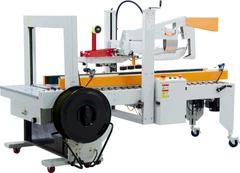
What is the working principle of ss packing conveyor?
Jul 29, 2025
Leave a message
Hey there! As a supplier of SS packing conveyors, I'm super stoked to dive into the working principle of these nifty machines. Let's get right into it!
The Basics of SS Packing Conveyor
First off, what exactly is an SS packing conveyor? Well, "SS" stands for stainless steel, which is a key material used in these conveyors. Stainless steel is chosen because it's durable, resistant to corrosion, and easy to clean – all essential features for a conveyor used in packing operations.
The main job of an SS packing conveyor is to move products from one point to another during the packing process. It can handle all sorts of items, from small, lightweight packages to heavier, bulkier ones. Whether you're packing food products, electronics, or industrial goods, an SS packing conveyor can be a game - changer.
Components of an SS Packing Conveyor
To understand how an SS packing conveyor works, we need to look at its main components.
1. Frame
The frame is the backbone of the conveyor. It's made of stainless steel, providing a sturdy and stable structure. The frame holds all the other components in place and is designed to support the weight of the products being transported.
2. Rollers
Rollers are a crucial part of the conveyor. They come in different sizes and materials, but in an SS packing conveyor, stainless - steel rollers are commonly used. These rollers rotate freely, allowing the products to move smoothly along the conveyor. There are two main types of rollers: gravity rollers and powered rollers.
- Gravity Rollers: These rely on gravity to move the products. If the conveyor is slightly inclined, the products will roll down the conveyor on the gravity rollers. You can check out our Stainless Steel Gravity Roller Conveyor for more details.
- Powered Rollers: These are connected to a motor and are driven by it. The motor provides the power to rotate the rollers, moving the products forward. Our Stainless Steel Roller Conveyor often uses powered rollers for more precise control.
3. Drive System
The drive system is responsible for powering the conveyor. It usually consists of a motor, a gearbox, and a chain or belt. The motor provides the initial power, and the gearbox adjusts the speed and torque. The chain or belt transfers the power from the motor to the rollers.
4. Controls
Modern SS packing conveyors come with advanced control systems. These can be used to adjust the speed of the conveyor, start and stop it, and even synchronize it with other machines in the packing line. Some controls can be operated manually, while others can be automated using programmable logic controllers (PLCs).


The Working Principle
Now that we know the components, let's see how an SS packing conveyor actually works.
Loading the Products
The process starts with loading the products onto the conveyor. This can be done manually or by using other machines, such as a pick - and - place robot. Once the products are on the conveyor, they are ready to be transported.
Movement on the Conveyor
If the conveyor uses gravity rollers, the products will start moving as soon as they are placed on the slightly inclined conveyor. The force of gravity causes the products to roll down the rollers. However, if powered rollers are used, the motor in the drive system starts rotating the rollers. The friction between the rollers and the products causes the products to move forward.
The speed of the conveyor can be adjusted according to the requirements of the packing process. For example, if you're packing delicate products, you might want to slow down the conveyor to avoid damage. On the other hand, if you're packing high - volume products, you can increase the speed to improve efficiency.
Transfer and Alignment
As the products move along the conveyor, they may need to be transferred to other conveyors or machines in the packing line. Special transfer mechanisms, such as a belt - to - roller transfer or a roller - to - roller transfer, are used to ensure a smooth transition.
Alignment is also important. Some SS packing conveyors are equipped with guides or sensors to keep the products in the correct position. This is especially crucial when the products need to be packed in a specific orientation.
Unloading the Products
Once the products reach the end of the conveyor, they are unloaded. This can be done manually or by using an automated unloading system, such as a chute or a robotic arm. The unloaded products are then ready for the next step in the packing process, such as sealing, labeling, or palletizing.
Advantages of Using an SS Packing Conveyor
There are several reasons why an SS packing conveyor is a great choice for your packing operations.
Durability
Stainless steel is a very durable material. It can withstand harsh environments, including high humidity, chemicals, and frequent cleaning. This means that your SS packing conveyor will last a long time, reducing the need for frequent replacements.
Hygiene
In industries such as food and pharmaceuticals, hygiene is of utmost importance. Stainless steel is easy to clean and sanitize, making it ideal for use in these industries. An SS packing conveyor can help you meet strict hygiene standards.
Customization
SS packing conveyors can be customized to meet your specific needs. You can choose the length, width, height, and type of rollers according to the size and weight of the products you're packing. You can also add special features, such as side guards, sensors, and adjustable speed controls.
Applications
SS packing conveyors are used in a wide range of industries.
Food Industry
In the food industry, SS packing conveyors are used to transport food products from the production line to the packaging area. They can handle everything from fresh produce to processed foods. The hygienic properties of stainless steel make it a perfect choice for this industry.
Electronics Industry
In the electronics industry, SS packing conveyors are used to move delicate electronic components during the assembly and packing process. The precise control of the conveyor speed and alignment ensures that the components are not damaged.
Industrial Goods Industry
For industrial goods, such as machinery parts and tools, SS packing conveyors can handle heavy - duty loads. They can be used to transport large and bulky items efficiently.
Contact Us for Your Packing Conveyor Needs
If you're in the market for an SS packing conveyor, we're here to help. Our team of experts can assist you in choosing the right conveyor for your specific requirements. Whether you need a simple gravity conveyor or a complex automated packing line, we have the solutions.
Don't hesitate to reach out to us to discuss your needs and get a quote. You can check out our SS Packing Conveyor page for more information. Let's work together to improve your packing operations!
References
- Conveyor Handbook: A Guide to Conveyor Systems and Their Applications
- Industrial Conveyor Design and Operation Manual
Send Inquiry