


What are the different types of belt materials available?
Oct 22, 2025
Leave a message
Hey there! As a belt conveyor supplier, I've seen firsthand the importance of choosing the right belt material for different applications. In this blog, I'm gonna break down the different types of belt materials available and give you the lowdown on what makes each one unique.
1. Rubber Belts
Rubber belts are hands - down one of the most popular choices in the belt conveyor world. They're super versatile and can be used in a wide range of industries.
Advantages
- Flexibility: Rubber belts are incredibly flexible, which allows them to conform to different pulley sizes and conveyor configurations. This flexibility also helps in reducing wear and tear on the conveyor system.
- Shock Absorption: They have excellent shock - absorbing properties. So, if you're transporting heavy or fragile items, rubber belts can cushion the impact and prevent damage to the goods.
- Good Traction: The surface of rubber belts provides good traction, ensuring that the materials being transported stay in place and don't slip off during the conveying process.
Applications
You can find rubber belts in many industries. For example, in the food industry, they're used to transport fruits, vegetables, and packaged goods. In mining, rubber belts are used to move large amounts of ore and minerals. And in manufacturing, they're often used on assembly lines. If you're interested in a Rubber Belt Conveyor, we've got you covered. We also have a Rubber Belt Conveyor factory where we produce high - quality rubber belt conveyors.
2. PVC Belts
PVC (Polyvinyl Chloride) belts are another common option. They're made from a synthetic plastic material and have some distinct features.

Advantages
- Chemical Resistance: PVC belts are resistant to many chemicals, making them ideal for industries where the conveyor belts may come into contact with various substances. For example, in the chemical manufacturing industry, PVC belts can withstand exposure to acids, alkalis, and other corrosive materials.
- Easy to Clean: They're relatively easy to clean, which is a big plus in industries with strict hygiene standards, such as the food and pharmaceutical industries.
- Cost - Effective: PVC belts are generally more affordable compared to some other belt materials, making them a great choice for budget - conscious businesses.
Applications
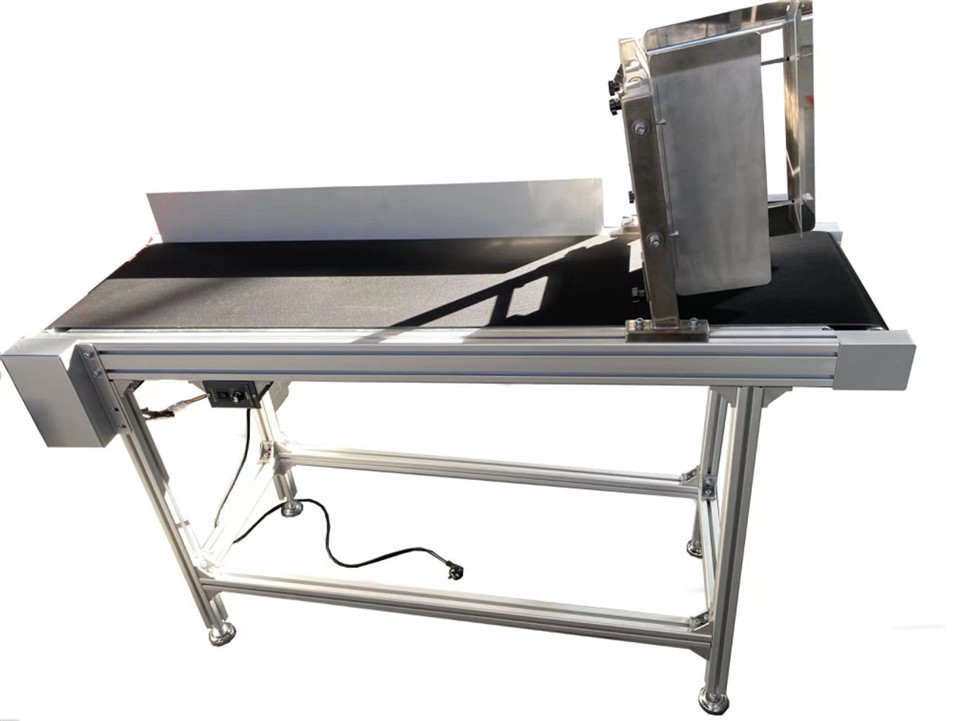
In the packaging industry, PVC belts are widely used on Packing Conveyor systems to move boxes, cartons, and other packaged products. They're also used in the textile industry to transport fabrics and in the electronics industry for moving small components.
3. Polyurethane Belts
Polyurethane belts are known for their high performance and durability.
Advantages
- High Tensile Strength: They have a high tensile strength, which means they can handle heavy loads without stretching or breaking easily. This makes them suitable for long - distance conveying and applications where large amounts of material need to be moved.
- Abrasion Resistance: Polyurethane belts are very resistant to abrasion. So, if you're transporting materials with sharp edges or rough surfaces, these belts can withstand the wear and tear better than many other materials.
- Food - Grade Options Available: There are food - grade polyurethane belts available, which are safe for use in the food industry. They meet the strict safety and hygiene standards required for handling food products.
Applications
In the automotive industry, polyurethane belts are used to transport car parts on assembly lines. In the recycling industry, they're used to move waste materials. And in the food processing industry, they can be used for tasks like moving meat, dairy products, and baked goods.
4. Metal Belts
Metal belts are a bit different from the other materials we've discussed so far. They're made from various metals, such as stainless steel or carbon steel.
Advantages
- High Temperature Resistance: Metal belts can withstand extremely high temperatures. This makes them ideal for applications in industries like glass manufacturing, where the conveyor belts need to operate in high - heat environments.
- Strength and Durability: They're very strong and durable, capable of handling heavy loads and rough handling. Metal belts can also last a long time, reducing the need for frequent replacements.
- Cleanliness: Metal belts are easy to clean and are resistant to contamination. In industries where cleanliness is crucial, such as the semiconductor industry, metal belts are a popular choice.
Applications
In the heat - treating industry, metal belts are used to transport parts through furnaces. In the printing industry, they're used to move paper and other printing materials. And in the canning industry, metal belts are used to transport cans during the manufacturing process.
5. Fabric - Reinforced Belts
Fabric - reinforced belts are made by combining a fabric layer with a rubber or plastic coating.
Advantages
- Enhanced Strength: The fabric layer provides additional strength to the belt, allowing it to handle heavier loads compared to non - reinforced belts.
- Customizability: They can be customized to meet specific requirements. For example, the type of fabric, the thickness of the coating, and the overall design can be adjusted according to the application.
- Good Flexibility: Despite the added strength from the fabric layer, fabric - reinforced belts still maintain good flexibility, making them suitable for various conveyor configurations.
Applications
In the agricultural industry, fabric - reinforced belts are used to transport grains, seeds, and other agricultural products. In the logistics industry, they're used in warehouses to move pallets and packages.
Choosing the Right Belt Material
When it comes to choosing the right belt material for your conveyor system, there are a few things you need to consider.
- Load Requirements: Think about the weight and size of the materials you'll be transporting. If you're moving heavy items, you'll need a belt with high strength, like a metal or polyurethane belt.
- Environmental Conditions: Consider the temperature, humidity, and presence of chemicals in the environment where the conveyor will be operating. For high - temperature environments, a metal belt is a good choice, while in a chemical - rich environment, a PVC or rubber belt with chemical resistance may be more suitable.
- Hygiene Standards: If your industry has strict hygiene requirements, such as the food or pharmaceutical industries, you'll need a belt material that's easy to clean and meets the necessary safety standards, like a food - grade polyurethane or PVC belt.
- Cost: Of course, cost is always a factor. You need to balance the performance and features of the belt material with your budget. Sometimes, a more expensive belt may offer better long - term value due to its durability and reduced need for replacements.
Conclusion
As you can see, there are many different types of belt materials available, each with its own set of advantages and applications. Whether you need a Rubber Belt Conveyor for your food processing plant, a Packing Conveyor for your packaging business, or any other type of conveyor system, we're here to help. We have a wide range of belt materials and conveyor systems to meet your specific needs.
If you're interested in learning more about our belt conveyor products or need help choosing the right belt material for your application, don't hesitate to reach out. We're always happy to have a chat and discuss your requirements. Let's work together to find the perfect conveyor solution for your business!
References
- "Conveyor Belt Handbook" - A comprehensive guide on conveyor belts and their materials.
- Industry reports on conveyor belt technology and applications.
- Manufacturer's specifications for different belt materials.
Send Inquiry