





What is the difference between a direct - drive and a chain - drive rubber belt conveyor?
Sep 24, 2025
Leave a message
Hey there! As a supplier of rubber belt conveyors, I often get asked about the differences between direct - drive and chain - drive rubber belt conveyors. So, I thought I'd take a moment to break it down for you in a way that's easy to understand.
Let's start with the basics. A rubber belt conveyor is a workhorse in many industries. It's used to move all sorts of materials, from small parts in a manufacturing plant to large bulk items in a mining operation. The conveyor belt itself is usually made of rubber or a rubber - like material, and it runs on a series of rollers or pulleys. The two main types of drive systems we're going to talk about are direct - drive and chain - drive.
Direct - Drive Rubber Belt Conveyors
A direct - drive rubber belt conveyor is, well, pretty straightforward. In a direct - drive system, the motor is directly connected to the drive pulley of the conveyor belt. There aren't a bunch of extra components like chains or gears in between. This simplicity is one of the biggest advantages of direct - drive systems.
One of the key benefits is efficiency. Since there are fewer moving parts, there's less energy loss due to friction. That means the conveyor uses less power to operate, which can save you a lot of money on your electricity bill in the long run. For example, in a large - scale manufacturing facility where conveyors are running 24/7, those energy savings can really add up.
Another advantage is maintenance. With fewer parts, there's less to go wrong. You don't have to worry about things like chain tension, lubrication, or chain wear. This reduces the amount of time and money you need to spend on maintenance. You can focus on running your business instead of constantly fixing your conveyor.
Direct - drive conveyors also tend to be quieter. Without the clanking and rattling of chains, the noise level in your workplace can be significantly reduced. This is not only better for your employees' ears but can also help create a more pleasant working environment.
However, direct - drive conveyors do have some limitations. They're generally not as suitable for heavy - duty applications where a lot of torque is required. The direct connection between the motor and the pulley means that if there's a sudden overload, it can put a lot of stress on the motor and the pulley. This can lead to premature wear and even motor failure.
Chain - Drive Rubber Belt Conveyors
Now, let's talk about chain - drive rubber belt conveyors. In a chain - drive system, a chain is used to transfer power from the motor to the drive pulley. The chain runs on sprockets, which are like gears with teeth that fit into the links of the chain.
One of the biggest advantages of chain - drive conveyors is their ability to handle heavy loads. The chain can transmit a large amount of torque, making it ideal for applications where you need to move big, heavy items. For example, in a mining operation, chain - drive conveyors are often used to transport large chunks of ore or coal.
Chain - drive systems are also more flexible in terms of speed and torque. You can easily change the speed of the conveyor by using different sized sprockets. This allows you to adjust the conveyor's performance to suit your specific needs.
Another benefit is that chain - drive conveyors can be more forgiving when it comes to overloads. The chain can slip on the sprockets if there's too much resistance, which can prevent damage to the motor. This makes them a good choice for applications where there's a risk of sudden jams or blockages.
However, chain - drive conveyors do have some drawbacks. As I mentioned earlier, they require more maintenance. You need to regularly check the chain tension, lubricate the chain, and replace worn - out parts. This can be time - consuming and expensive.
They're also noisier than direct - drive conveyors. The constant movement of the chain on the sprockets creates a lot of noise, which can be a problem in some workplaces.
Which One Should You Choose?
So, how do you decide whether a direct - drive or a chain - drive rubber belt conveyor is right for you? Well, it really depends on your specific needs.
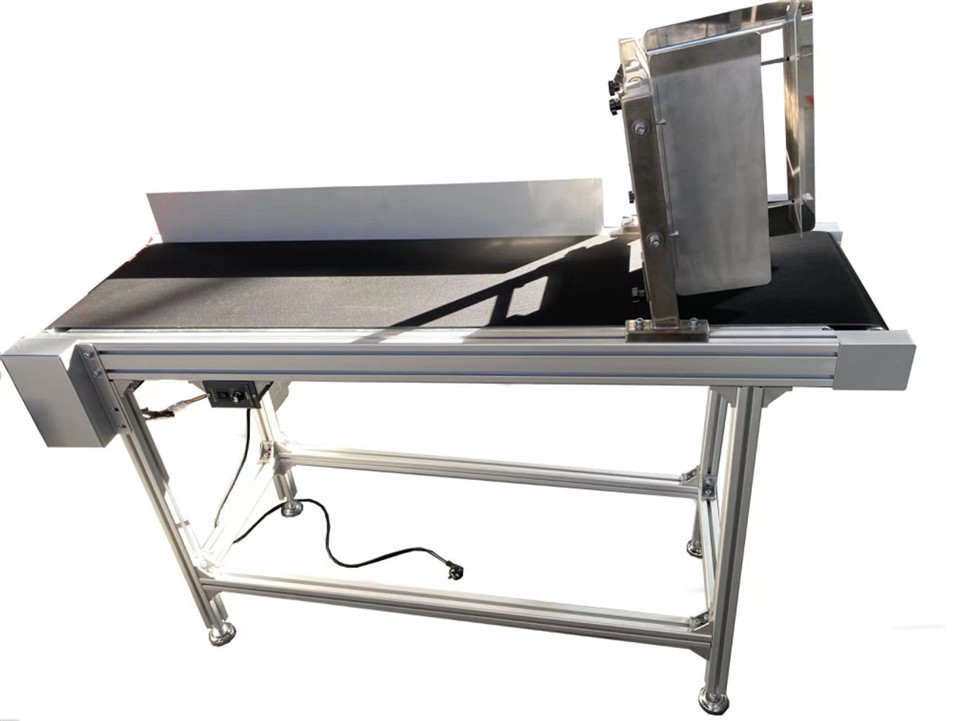

If you're running a small - to - medium - sized operation where energy efficiency, low noise, and minimal maintenance are important, a direct - drive conveyor might be the way to go. You can check out our Conveyor Belt Equipment page to see some of the direct - drive options we offer.
On the other hand, if you're dealing with heavy - duty applications, need a lot of torque, or require more flexibility in terms of speed and overload protection, a chain - drive conveyor might be a better fit. Our Power Belt Conveyors section has some great chain - drive models that could meet your requirements.
If you're in the packing industry, you might also be interested in our Packing Conveyor options. These conveyors are designed to handle the specific needs of packing operations, whether you're using a direct - drive or a chain - drive system.
Conclusion
In conclusion, both direct - drive and chain - drive rubber belt conveyors have their own unique advantages and disadvantages. As a supplier, we're here to help you make the right choice for your business. We have a wide range of conveyors to suit different applications and budgets.
If you're still not sure which type of conveyor is best for you, don't hesitate to reach out. Our team of experts can answer your questions, provide more detailed information, and even help you with a custom solution. We're committed to providing you with the best conveyor system for your needs. So, if you're thinking about purchasing a rubber belt conveyor, let's have a chat and see how we can work together.
References
- "Conveyor Belt Handbook" - A comprehensive guide on conveyor belt technology and applications.
- Industry research reports on conveyor systems and their performance in different sectors.
Send Inquiry