


What are the solutions for handling irregular - shaped materials on power belt conveyors?
Dec 05, 2025
Leave a message
Handling irregular-shaped materials on power belt conveyors can be a real headache. As a power belt conveyors supplier, I've seen my fair share of challenges when it comes to moving those odd-shaped items efficiently. In this blog, I'll share some solutions that can help you tackle this problem head-on.
1. Customized Belt Designs
One of the first things you can do is look into customized belt designs. Regular belts might not be the best fit for irregular-shaped materials. For example, cleated belts can be a great option. These belts have raised sections or cleats that can prevent the materials from sliding off. Imagine you're trying to move small, round objects like balls or cylindrical parts. A cleated belt can hold them in place as they travel along the conveyor.
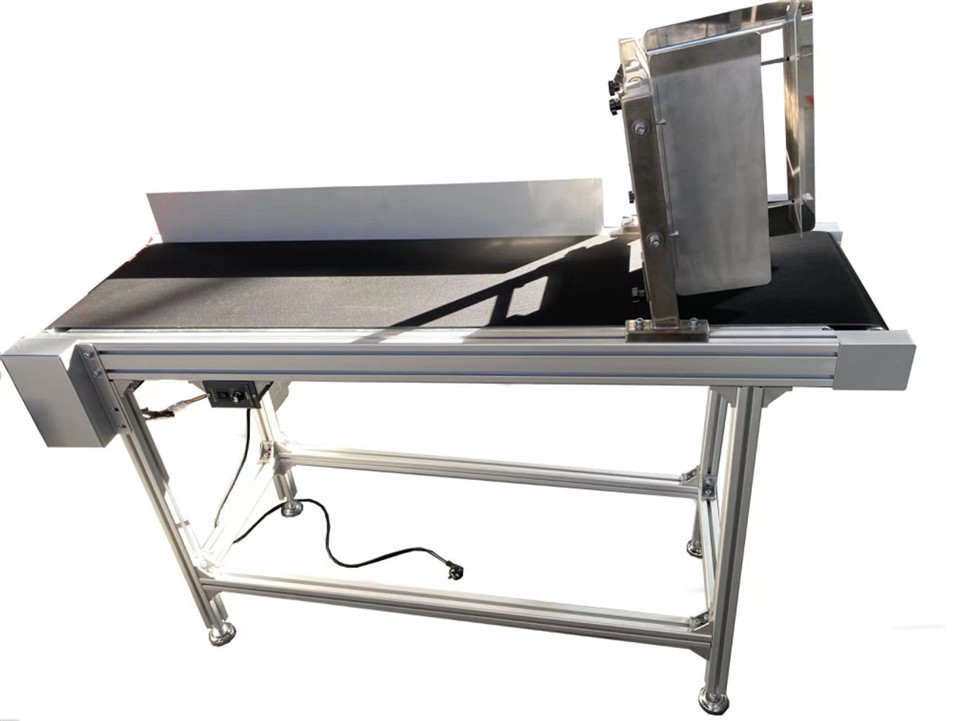

Another option is a modular belt. These belts are made up of individual modules that can be arranged in different patterns. You can customize the module design to better accommodate irregular shapes. For instance, if you're dealing with long, thin items, you can configure the modules to create a narrow channel that guides the materials. You can learn more about different types of conveyor belts on our Conveyor Belt Equipment page.
2. Guide Rails and Side Guards
Installing guide rails and side guards is another effective solution. Guide rails can be placed along the sides of the conveyor to keep the irregular-shaped materials in line. They act like a fence, preventing the items from falling off the belt. Side guards, on the other hand, can be used to contain the materials and prevent them from shifting too much.
For example, if you're moving large, flat pieces of wood or metal sheets, guide rails can ensure that they stay centered on the belt. This not only prevents spills but also improves the overall efficiency of the conveyor system. You can adjust the height and width of the guide rails and side guards according to the size and shape of the materials you're handling.
3. Vibratory Feeding Systems
Vibratory feeding systems can be a game-changer when it comes to handling irregular-shaped materials. These systems use vibrations to move the materials along the conveyor. The vibrations help to align the materials and prevent them from getting stuck or jumbled up.
Let's say you're dealing with small, irregularly shaped parts like screws or nuts. A vibratory feeder can gently shake the parts and arrange them in a more orderly manner before they reach the conveyor. This makes it easier for the conveyor to transport them smoothly. You can find more information about different types of conveyors, including those with vibratory feeding systems, on our Packing Conveyor page.
4. Multiple Conveyor Configurations
Sometimes, using a single conveyor might not be enough to handle irregular-shaped materials. In such cases, you can consider using multiple conveyor configurations. For example, you can use a combination of inclined and horizontal conveyors.
An inclined conveyor can be used to lift the materials to a certain height, while a horizontal conveyor can be used to transport them over a longer distance. This way, you can better control the movement of the materials and ensure that they reach their destination safely. You can also use a series of conveyors with different belt speeds to separate or sort the irregular-shaped materials.
5. Sensor and Automation Systems
Sensor and automation systems can greatly improve the handling of irregular-shaped materials on power belt conveyors. Sensors can be used to detect the presence, position, and size of the materials. Based on this information, the conveyor system can adjust its speed, direction, or other parameters to ensure smooth operation.
For example, if a sensor detects that an irregular-shaped item is about to fall off the belt, it can trigger an alarm or automatically adjust the conveyor's speed to prevent the spill. Automation systems can also be used to sort the materials based on their shape, size, or other characteristics. This can save a lot of time and effort, especially in large-scale operations.
6. Training and Maintenance
Lastly, proper training and maintenance are crucial for handling irregular-shaped materials on power belt conveyors. Your employees should be trained on how to operate the conveyor system safely and effectively. They should know how to adjust the settings, troubleshoot common problems, and perform basic maintenance tasks.
Regular maintenance of the conveyor system is also important. This includes checking the belts for wear and tear, lubricating the moving parts, and tightening any loose bolts or screws. By keeping the conveyor in good condition, you can prevent breakdowns and ensure that it continues to operate smoothly.
In conclusion, handling irregular-shaped materials on power belt conveyors requires a combination of customized solutions, proper equipment, and good maintenance practices. As a power belt conveyors supplier, we have the expertise and experience to help you find the best solution for your specific needs. If you're facing challenges with handling irregular-shaped materials in your conveyor system, don't hesitate to contact us for a consultation. We can work together to design and implement a conveyor system that meets your requirements and improves your productivity.
References
- Conveyor Belt Handbook, Industry Standard Publication
- Best Practices in Material Handling, Logistics Research Institute
So, if you're looking to upgrade your conveyor system or need help with handling those tricky irregular-shaped materials, get in touch with us today. We're here to make your conveyor operations run smoother and more efficiently.
Send Inquiry