



What are the dust - prevention measures for an unpowered conveyor?
Jan 16, 2026
Leave a message
As a supplier of unpowered conveyors, I understand the importance of dust prevention in maintaining the efficiency and longevity of these systems. Unpowered conveyors, which rely on gravity or manual force to move materials, are commonly used in various industries such as manufacturing, warehousing, and logistics. However, the movement of materials can generate dust, which can pose health risks to workers, damage equipment, and contaminate the surrounding environment. In this blog post, I will discuss some effective dust - prevention measures for unpowered conveyors.
Enclosure Systems
One of the most effective ways to prevent dust from spreading is by enclosing the unpowered conveyor. An enclosure acts as a physical barrier, trapping the dust generated during the material - handling process. There are different types of enclosures that can be used depending on the specific requirements of the conveyor system.
Full - length enclosures cover the entire length of the conveyor, providing maximum dust containment. These enclosures are typically made of materials such as steel, aluminum, or plastic. They can be customized to fit the size and shape of the conveyor, and access doors can be installed for maintenance and inspection purposes.
Partial enclosures, on the other hand, cover only specific sections of the conveyor where dust generation is most significant, such as the loading and unloading points. This type of enclosure is more cost - effective and can still provide a high level of dust control.
When designing an enclosure system, it is important to ensure proper ventilation. Without adequate ventilation, the build - up of dust inside the enclosure can create an explosive or hazardous environment. Ventilation systems can be installed to remove the dust - laden air from the enclosure and filter it before releasing it back into the environment.

Dust Collection Systems
In addition to enclosures, dust collection systems are essential for effective dust prevention. These systems work by capturing the dust at the source and removing it from the air. There are several types of dust collection systems that can be used with unpowered conveyors.
Baghouse dust collectors are one of the most common types of dust collection systems. They use fabric bags to filter the dust from the air. As the dust - laden air passes through the bags, the dust particles are trapped on the surface of the bags, and the clean air is released. Periodically, the bags are cleaned to remove the accumulated dust.
Cyclone dust collectors are another option. They use centrifugal force to separate the dust from the air. The dust - laden air enters the cyclone at a high speed, and the centrifugal force causes the dust particles to move towards the outer wall of the cyclone and fall into a collection hopper, while the clean air exits through the top.
Cartridge dust collectors are also popular. They use filter cartridges to remove dust from the air. These cartridges are more compact and easier to replace compared to bag filters.
When selecting a dust collection system, it is important to consider factors such as the type and size of the dust particles, the volume of dust generated, and the airflow requirements of the conveyor system.
Sealing and Gasketing
Proper sealing and gasketing of the conveyor components can also help prevent dust leakage. At the joints and connections of the conveyor, such as the seams between conveyor sections and the connections between the conveyor and other equipment, gaskets can be installed to create a tight seal.
Sealing materials should be selected based on their durability, flexibility, and resistance to dust and abrasion. Rubber gaskets are commonly used due to their good sealing properties and ability to withstand the rigors of conveyor operation.
In addition to the mechanical connections, the loading and unloading points of the conveyor should also be properly sealed. For example, at the loading point, a chute can be designed with a sealing mechanism to prevent dust from escaping when the materials are being loaded onto the conveyor.
Material Selection
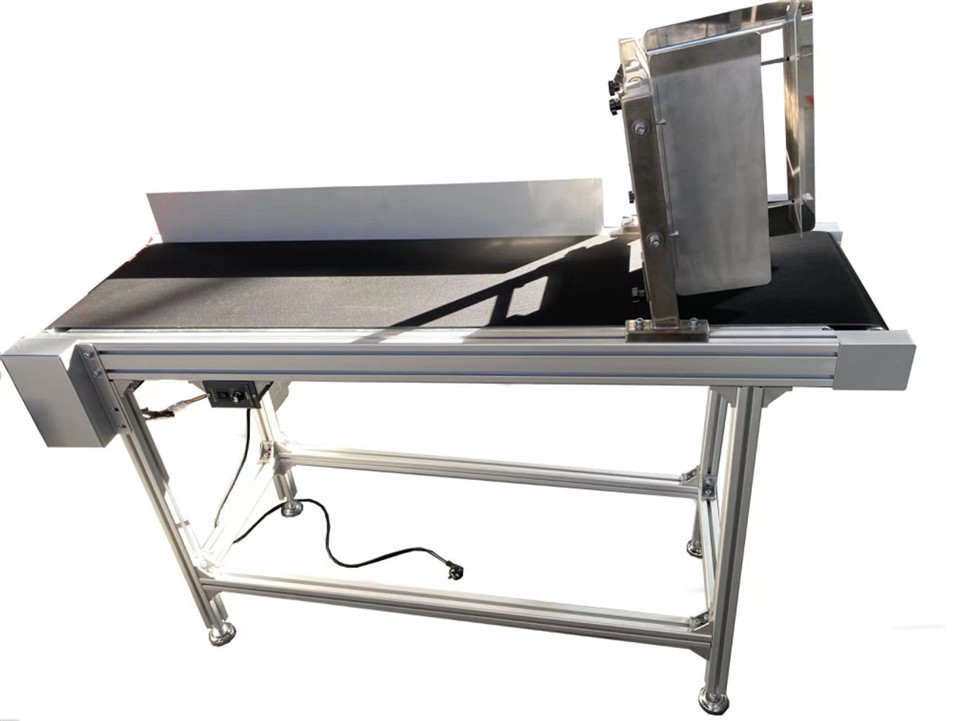
The choice of materials for the conveyor components can also have an impact on dust generation. For example, using smooth - surfaced conveyor belts can reduce the amount of dust that adheres to the belt. Rubber Belt Conveyor is a popular option as rubber belts are generally smooth and have good resistance to abrasion.
When selecting the materials for the conveyor structure, materials that are easy to clean and maintain should be chosen. Stainless steel is a good choice as it is resistant to corrosion and can be easily wiped clean to remove any dust that may accumulate on its surface.
Regular Maintenance
Regular maintenance of the unpowered conveyor is crucial for dust prevention. This includes cleaning the conveyor components, inspecting the enclosure and dust collection systems, and replacing worn - out parts.
The conveyor belt should be cleaned regularly to remove any dust or debris that may have accumulated on its surface. This can be done using brushes or vacuum cleaners. The rollers and other moving parts of the conveyor should also be inspected for wear and tear, as damaged parts can cause increased friction and dust generation.
The enclosure system should be checked for any leaks or damage, and the ventilation system should be maintained to ensure proper airflow. The dust collection system should be inspected regularly to ensure that it is operating efficiently. Filters should be replaced as needed, and the collection hoppers should be emptied to prevent overflow.
Employee Training
Finally, employee training is an important aspect of dust prevention. Workers who operate and maintain the unpowered conveyors should be trained on the proper procedures for dust prevention. This includes understanding the importance of using enclosures and dust collection systems, how to operate and maintain these systems, and the proper use of personal protective equipment (PPE).
PPE such as dust masks, goggles, and protective clothing should be provided to the workers, and they should be trained on how to use them correctly. Workers should also be educated on the health risks associated with dust exposure and the importance of reporting any issues related to dust generation or control.
In conclusion, effective dust prevention for unpowered conveyors requires a comprehensive approach that includes enclosure systems, dust collection systems, sealing and gasketing, material selection, regular maintenance, and employee training. By implementing these measures, companies can reduce the health risks to their workers, protect their equipment from damage, and comply with environmental regulations.
If you are in the market for an unpowered conveyor or need to improve the dust - prevention measures of your existing conveyor system, we are here to help. As a leading Belt Conveyor Manufacturers, we offer a wide range of high - quality unpowered conveyors and related products, including Packing Conveyor. Contact us today to discuss your specific requirements and start a procurement negotiation.
References
- "Industrial Ventilation: A Manual of Recommended Practice", American Conference of Governmental Industrial Hygienists.
- "Dust Collection Handbook", Air Pollution Control Association.
- "Conveyor Systems Handbook", Conveyor Equipment Manufacturers Association.
Send Inquiry