



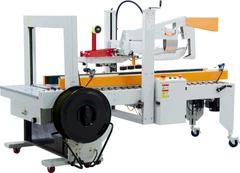
What are the communication interfaces of an automated packing stacker?
Jan 19, 2026
Leave a message
Hey there! As a supplier of packing stackers, I'm super stoked to chat with you about the communication interfaces of an automated packing stacker. These interfaces are like the secret sauce that makes the whole system tick, allowing different components to talk to each other and get the job done efficiently.
First off, let's talk about why communication interfaces are so important. In an automated packing stacker, there are a bunch of different parts working together - things like conveyor belts, robotic arms, sensors, and control systems. Without proper communication between these components, the whole operation would be a hot mess. The interfaces ensure that data can flow smoothly between different devices, so they can coordinate their actions and perform tasks accurately.
One of the most common communication interfaces used in packing stackers is Ethernet. Ethernet is a well - known and widely used network technology that offers high - speed data transfer. It allows the control system to send and receive commands from various devices in the stacker. For example, the main control unit can use Ethernet to tell a robotic arm when to pick up a product and where to place it on the stack. It's also great for connecting the stacker to other factory systems, like the inventory management software. This way, the stacking process can be integrated into the overall production workflow, making the whole operation more seamless. You can learn more about how Ethernet is used in similar machines on our Automatic Book Stacker page.
Another popular interface is Modbus. Modbus is a serial communication protocol that's been around for a long time. It's simple, reliable, and easy to implement. In a packing stacker, Modbus can be used to communicate with sensors and actuators. Sensors can send data about things like the position of products on the conveyor belt or the status of the stack, while actuators can receive commands to perform actions such as opening or closing a gate. Modbus is often used for devices that don't require extremely high - speed data transfer but need a stable and straightforward communication method.
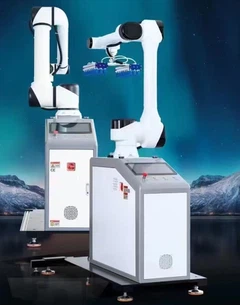
CAN (Controller Area Network) is also an important interface in the world of packing stackers. CAN was originally developed for the automotive industry, but it's found its way into industrial applications too. It's great for real - time communication between different parts of a system. In a packing stacker, CAN can be used to connect multiple control modules. For example, if there are several robotic arms working in tandem, CAN can ensure that they all move in sync and avoid collisions. It's a robust protocol that can handle noisy electrical environments, which is very useful in a factory setting.
Profibus is yet another option for communication in automated packing stackers. Profibus is a fieldbus system that allows for fast and efficient communication between sensors, actuators, and control units. It's well - suited for long - distance communication, which can be important in a large packing facility where the stacker components might be spread out over a wide area. Profibus also has good diagnostic capabilities, so it's easier to troubleshoot problems when they arise.
Now, let's talk about some of the more modern communication interfaces. Wi - Fi is becoming increasingly popular in industrial applications, including packing stackers. Wi - Fi offers the advantage of wireless connectivity, which can make installation and maintenance a lot easier. For example, you can use Wi - Fi to connect handheld devices to the stacker's control system. This allows operators to monitor and control the stacker from a distance, without being tied down to a fixed control panel. However, it's important to ensure proper security measures are in place when using Wi - Fi, as industrial systems are often vulnerable to cyber attacks.
Bluetooth is another wireless option. It's convenient for short - range communication, such as between a small sensor and a nearby control unit. Bluetooth can be used to transmit data from sensors that are placed in hard - to - reach areas of the stacker. It's relatively low - power, which means that sensor batteries can last longer.
When choosing the right communication interfaces for your packing stacker, there are a few things to consider. First, think about the speed and reliability requirements of your system. If you need to transfer large amounts of data quickly, Ethernet or Profibus might be the best choice. If you're dealing with simple sensors and actuators, Modbus could be sufficient. Second, consider the physical layout of your facility. If your components are spread out, a long - distance communication protocol like Profibus might be necessary, while for a more compact setup, Bluetooth or Wi - Fi could work well.
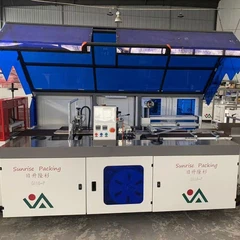
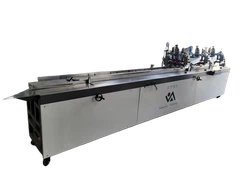
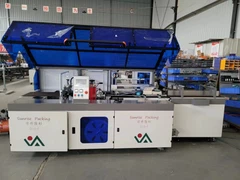
As a packing stacker supplier, we've got a lot of experience in integrating different communication interfaces into our machines. We understand that every customer's needs are unique, and we're here to help you find the best solution for your specific application. Whether you're looking for a high - speed Ethernet - based system or a simple Modbus - connected setup, we can customize our Packing Stacker to meet your requirements.
If you're in the market for an automated packing stacker and want to learn more about how the communication interfaces can benefit your operation, don't hesitate to reach out. We're always happy to have a chat, answer your questions, and provide you with a quote. Let's work together to make your packing process more efficient and productive!


References
- Industrial Communication Technology Handbook, Second Edition, by Peter Welander
- Modbus Protocol Specification, published by Modbus Organization
- CAN in Automation (CiA) standards for Controller Area Network
Send Inquiry