


How does a packing stacker work?
Dec 24, 2025
Leave a message
In the realm of modern manufacturing and packaging, efficiency and precision are paramount. One of the key players in achieving these goals is the packing stacker. As a trusted supplier of packing stackers, I am excited to take you on a journey into how these remarkable machines work and why they are indispensable in various industries.
The Basics of a Packing Stacker
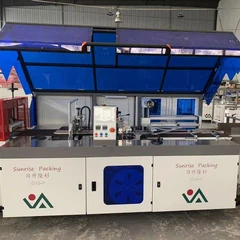
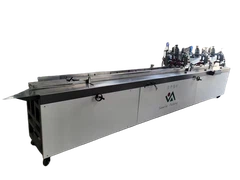
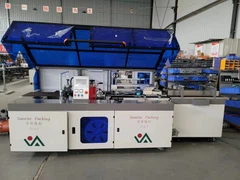
A packing stacker is a specialized piece of equipment designed to take individual items or packages and arrange them into organized stacks. This process is crucial for efficient storage, transportation, and handling of goods. Whether it's boxes of consumer products, books in a publishing house, or industrial components, packing stackers streamline the packaging process.
The core function of a packing stacker can be broken down into several key steps: receiving, positioning, stacking, and discharging. Let's explore each of these steps in detail.
Receiving
The first step in the operation of a packing stacker is the receiving of items. This can be accomplished in various ways, depending on the type of products being handled and the specific design of the stacker. In many cases, items are fed onto a conveyor belt that leads to the stacker. The conveyor belt may be equipped with sensors to detect the presence and position of the items, ensuring a smooth and consistent flow.
For example, in a food packaging facility, individual packages of snacks are transferred from the production line onto a conveyor belt. The conveyor then transports the packages towards the packing stacker, where they are ready to be stacked.
Positioning
Once the items reach the stacker, they need to be properly positioned before stacking can begin. This is where precision is crucial. The stacker uses a combination of mechanical and electronic components to ensure that each item is placed in the correct position for stacking.
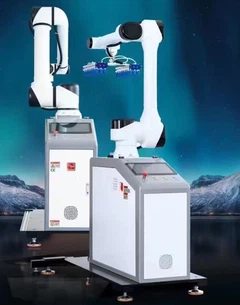
Some packing stackers use robotic arms or grippers to pick up the items from the conveyor belt and place them in the desired location. These robotic systems are programmed to handle items of different sizes and shapes with high accuracy. Other stackers may use pneumatic or hydraulic systems to move and position the items.
In the case of an Automatic Book Stacker, the books are carefully aligned and positioned before being stacked. This ensures that the stacks are neat and stable, reducing the risk of damage during storage and transportation.
Stacking
The stacking process is the heart of the packing stacker's operation. There are several different stacking patterns and techniques that can be used, depending on the requirements of the application. Some common stacking patterns include layer-by-layer stacking, pyramid stacking, and block stacking.
Layer-by-layer stacking is the most straightforward method, where items are stacked one on top of another in a single layer. This pattern is often used for products that are uniform in size and shape, such as boxes of cereal or cans of soda. Pyramid stacking, on the other hand, involves stacking items in a triangular shape, with each layer having fewer items than the layer below it. This pattern is useful for creating stable stacks that can be easily stored and transported.
Block stacking is a more complex method that involves stacking items in a three-dimensional block. This pattern is often used for heavy or bulky items, such as pallets of bricks or large industrial components.


The packing stacker uses a combination of mechanical and electronic controls to ensure that the stacking process is carried out accurately and efficiently. The stacker may be programmed to stack a specific number of items in each layer, or to stack items in a specific pattern.
Discharging
Once the stack is complete, it needs to be discharged from the stacker. This can be done in several ways, depending on the design of the stacker and the requirements of the application. In some cases, the stack is simply pushed off the stacker onto a conveyor belt or pallet for further processing. Other stackers may use a lifting mechanism to raise the stack and place it on a pallet or in a storage area.
In a warehouse setting, the completed stacks are often transferred to a forklift or other material handling equipment for storage or shipping. The efficient discharging of stacks is essential for maintaining a smooth and continuous production process.
Types of Packing Stackers
There are several different types of packing stackers available on the market, each designed to meet the specific needs of different industries and applications. Some of the most common types include:
Manual Packing Stackers
Manual packing stackers are the simplest and most basic type of stacker. They are typically operated by a single operator who manually places the items on the stacker and arranges them into stacks. Manual stackers are often used in small-scale operations or for applications where the volume of products is relatively low.
Semi-Automatic Packing Stackers
Semi-automatic packing stackers combine manual and automated processes. These stackers typically use a conveyor belt to transport the items to the stacking area, and the operator is responsible for positioning and stacking the items. Semi-automatic stackers are more efficient than manual stackers and are suitable for medium-scale operations.
Fully Automatic Packing Stackers
Fully automatic packing stackers are the most advanced and efficient type of stacker. These stackers are capable of performing all the functions of receiving, positioning, stacking, and discharging without any human intervention. Fully automatic stackers are often used in large-scale manufacturing and packaging operations where high productivity and precision are required.
Benefits of Using a Packing Stacker
There are several benefits to using a packing stacker in your manufacturing or packaging process. Some of the key benefits include:
Increased Efficiency
Packing stackers can significantly increase the efficiency of your packaging process. By automating the stacking process, you can reduce the time and labor required to stack items manually. This allows you to increase your production output and meet the demands of your customers more quickly.
Improved Accuracy
Packing stackers are designed to stack items with high accuracy and precision. This ensures that the stacks are neat and stable, reducing the risk of damage during storage and transportation. Improved accuracy also means that you can make better use of your storage space, as the stacks can be arranged more efficiently.
Reduced Labor Costs
By automating the stacking process, you can reduce the number of workers required to perform this task. This can result in significant cost savings for your business, especially in industries where labor costs are high.
Enhanced Safety
Manual stacking can be a physically demanding and potentially dangerous task. Packing stackers eliminate the need for workers to lift and stack heavy items, reducing the risk of injuries and accidents. This creates a safer working environment for your employees.
Why Choose Our Packing Stackers
As a leading supplier of packing stackers, we offer a wide range of high-quality stackers to meet the needs of different industries and applications. Our stackers are designed and manufactured using the latest technology and materials, ensuring reliability, durability, and performance.
We understand that every customer has unique requirements, which is why we offer customized solutions to meet your specific needs. Our team of experienced engineers and technicians can work with you to design and build a packing stacker that is tailored to your exact specifications.
In addition to our high-quality products, we also offer excellent customer service and support. Our team is available to answer your questions, provide technical assistance, and ensure that your packing stacker is operating at its best.
If you are looking for a reliable and efficient packing stacker for your business, look no further. Contact us today to learn more about our Packing Stacker solutions and how they can benefit your operations. We are ready to work with you to find the perfect packing stacker for your needs and help you take your business to the next level.
References
- "Packaging Machinery Handbook" by Douglas J. Campbell
- "Automation in Manufacturing: Principles, Practice, and Control" by David A. Dornfeld
Send Inquiry